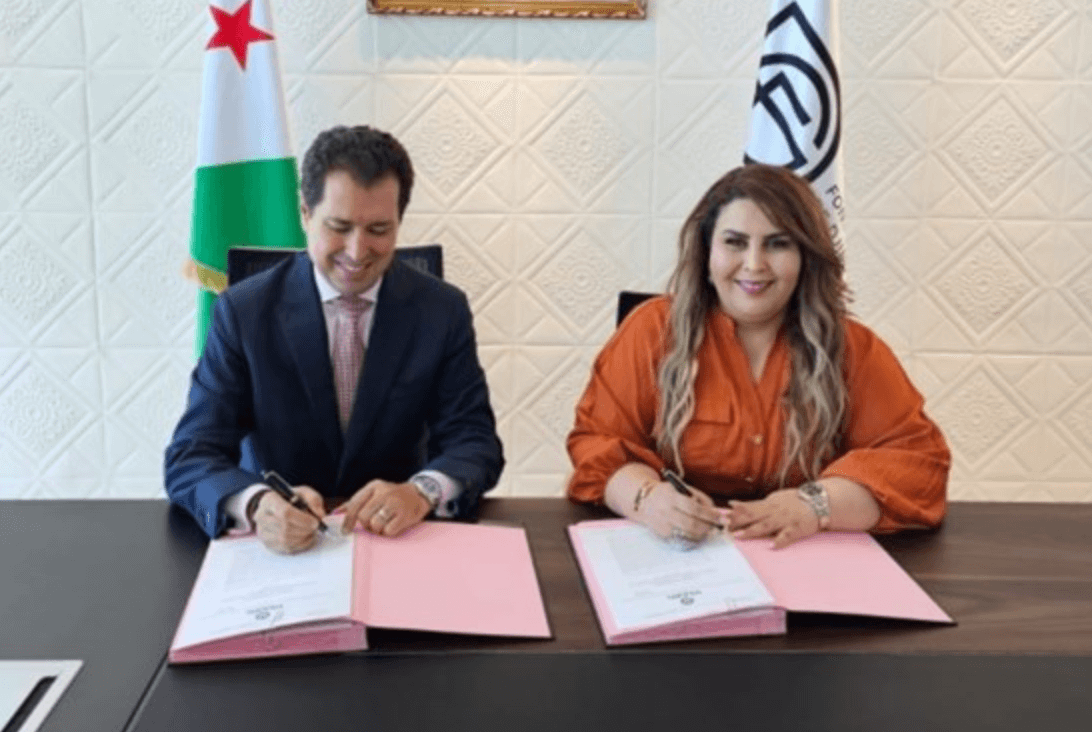


Brasilia rarely serves as the backdrop for international venture diplomacy, but a quiet meeting inside the Ministry of Entrepreneurship this month signals an ambitious push to redraw cross-border trade routes. When Dr. MAC Munir Ahmad Chaudhry, founder of OBS Global, sat down with Brazilian Minister of Entrepreneurship Paulo Pereira, the agenda went far beyond the typical diplomatic courtesy call. The delegation brought a sweeping proposition to the table: transform Latin America’s largest economy into an operational springboard linking regional enterprises directly to capital, technology, and trade pipelines across Africa, the Middle East, and Asia.
The initiative comes at a critical juncture for developing economies. While small and mid-sized enterprises generate the overwhelming majority of private-sector employment worldwide, their ability to break past national borders remains constrained by fragmented banking relationships, opaque regulations, and limited institutional backing. Most cross-border ventures still rely on established financial capitals in North America or Western Europe to broker deals. OBS Global is betting that an alternative network—what Chaudhry terms a chapter-based “Business Savior Ecosystem”—can bypass those traditional gatekeepers by establishing direct, institutionally backed corridors between emerging economic powerhouses.
Brazil is the linchpin of that strategy. As a powerhouse in agricultural production and renewable energy with a rapidly maturing digital sector, the country commands an enviable industrial footprint. Yet much of its domestic entrepreneurial talent has historically struggled to gain a foothold in fast-growing markets across the Eastern Hemisphere. By anchoring its Latin American expansion at the ministerial level in Brasilia, OBS Global aims to build structured channels where Brazilian mid-market operators can pursue joint ventures abroad while foreign investors gain clearer, de-risked access to domestic opportunities.
The scope of the planned cooperation spans sectors critical to long-term economic resilience. Conversations between Pereira and the OBS Global leadership zeroed in on agribusiness and food security, infrastructure, artificial intelligence, and sustainable urban development. These are capital-intensive domains that typically favor massive conglomerates, leaving emerging firms sidelined. Chaudhry’s model attempts to counter that dynamic by organizing private-sector networks to pool resources, share operational risk, and negotiate institutional support that individual business owners could never secure alone.
For Chaudhry, the strategy hinges on a fundamental rethink of how executive influence is measured. Rather than viewing international expansion as an extractive exercise in acquiring foreign assets, he argues that the private sector must take direct responsibility for building institutional scaffolding where public frameworks fall short. In his view, the real metric of commercial success is not the portfolio an executive accumulates, but the number of outside enterprises they help lift into solvency and scale. Connecting businesses, as he put it during the Brasilia talks, serves as a mechanism for connecting the economic ambitions of entire nations.
Translating high-level state meetings into tangible commercial results is notoriously difficult, particularly across disparate regulatory environments. Memorandums between international delegations and government ministries frequently stall once political attention shifts. The success of OBS Global’s Brazilian gambit will depend on whether its chapter-based framework can quickly mobilize private capital and provide local founders with actionable trade contracts, rather than theoretical networking forums.
If the Brasilia engagement produces workable cross-border joint ventures over the coming quarters, it could offer a tested blueprint for South-to-South commercial integration. By positioning Brazil as both an anchor and an outbound gateway, OBS Global is testing whether an organized community of entrepreneurs can construct an enduring economic bridge across four continents—one built on mutual market access rather than traditional financial dependency.