

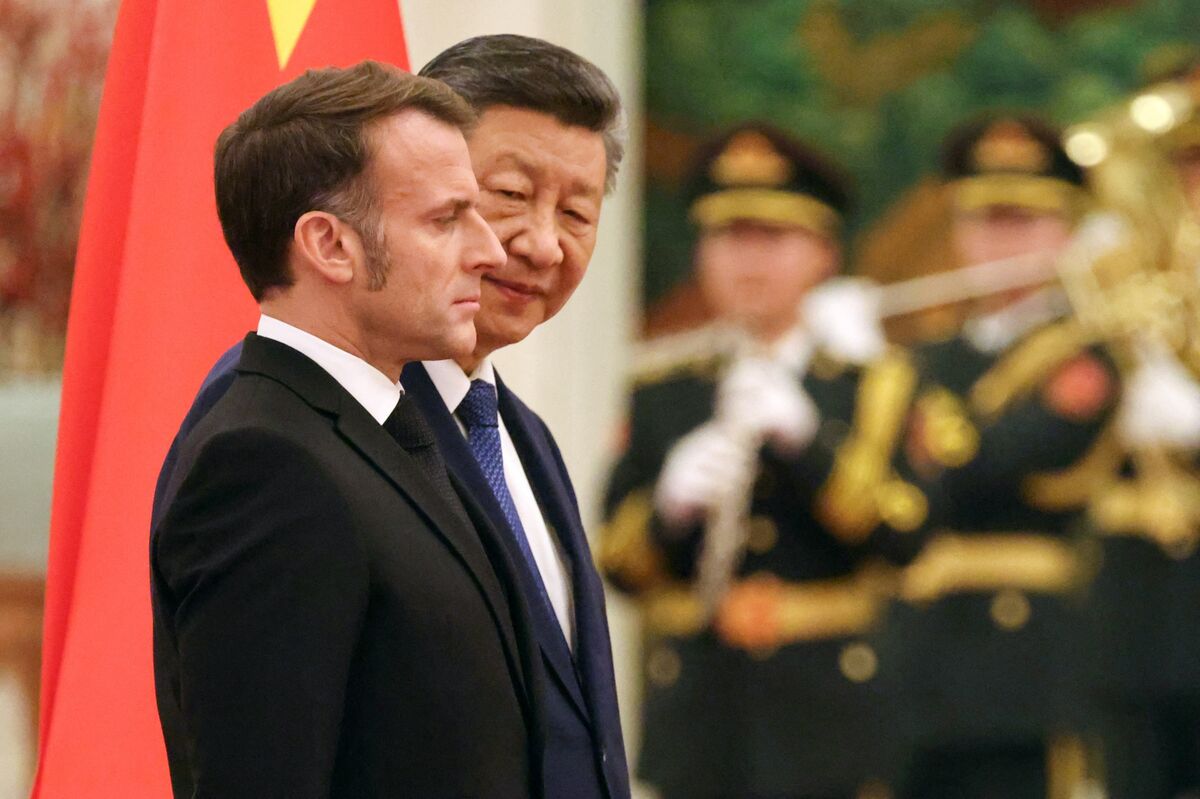
French President Emmanuel Macron has called on China to significantly expand its investment footprint in France as part of a broader effort to rebalance the widening trade gap between the two countries. During high-level discussions with President Xi Jinping, Macron emphasized the need for “fairer and more reciprocal” economic engagement, urging Beijing to deepen cooperation in sectors ranging from clean energy and advanced manufacturing to consumer goods and financial services.
The talks come at a moment when Europe’s economic relationship with China is undergoing recalibration, shaped by rising geopolitical tensions, supply-chain vulnerabilities, and concerns about market access for European firms. France, which currently faces one of the EU’s largest bilateral deficits with China, is seeking to correct long-standing asymmetries in trade and investment flows.
France’s Growing Trade Deficit With China: A Strategic Concern
China is one of France’s largest trading partners, but the bilateral relationship is dominated by imports. France’s trade deficit with China has grown steadily over the past decade, driven by:
- High volumes of electronics, industrial goods, and machinery imported from China
- Limited penetration of French products into Chinese consumer markets
- Structural barriers facing European companies in China
- China’s dominant role in global manufacturing supply chains
French officials say a more balanced economic relationship requires greater Chinese investment in French industries and increased access for French businesses in China.
Macron’s Pitch: A New Investment Framework
During discussions with Xi, Macron proposed a multi-dimensional strategy to attract more Chinese capital into France while safeguarding national interests.
1. Investment in Strategic Sectors
Macron highlighted several key areas where France seeks Chinese partnership:
- Renewable and clean energy technologies
- Electric vehicle supply chains
- High-tech manufacturing
- Aviation and aerospace components
- Digital infrastructure and cloud services
- Agro-food processing and sustainable agriculture
French officials stress that these sectors align with EU industrial policy while supporting global climate and energy-transition goals.
2. Support for Chinese Firms Expanding in Europe
France is positioning itself as a prime gateway for Chinese companies looking to scale operations across Europe, offering:
- Strong industrial capabilities
- Skilled labor
- Robust infrastructure
- EU market access
3. Regulatory Stability and Incentives
Paris is prepared to offer regulatory clarity and targeted incentives, provided investments follow EU competition rules, security protocols, and environmental standards.
China’s Position: Cautious but Open to Dialogue
Beijing has welcomed the prospect of deeper cooperation but has its own expectations:
- China seeks assurances against protectionism and discrimination in Europe.
- Chinese officials want France’s support in maintaining stable EU–China relations amid rising scrutiny from Brussels.
- Beijing urges Paris to resist U.S.-driven economic containment narratives.
Xi emphasized China’s willingness to invest in Europe but warned against “politicizing” economic decisions.
European Context: A Delicate Balancing Act
Macron’s outreach to China comes as the European Union adopts a more assertive stance toward Beijing. The EU’s evolving approach includes:
• De-risking rather than decoupling
Brussels aims to reduce strategic dependencies—especially in critical minerals, batteries, and medical supplies—without severing economic ties.
• Anti-subsidy investigations
Chinese EVs, renewable energy products, and industrial inputs are under investigation for unfair market advantages.
• Increasing pressure for reciprocity
European companies face strict licensing, data rules, and joint venture requirements in China that European leaders argue should be eased.
Macron must navigate these competing currents while pursuing French national interests.
Why France Wants More Chinese Investment Now
Several economic and strategic factors underpin Macron’s push:
1. Domestic Industrial Revitalization
France is investing heavily in reindustrialization, aiming to strengthen:
- Battery manufacturing
- Semiconductor production
- Green hydrogen
- Advanced materials
Chinese capital, technology, and supply-chain expertise could accelerate these initiatives.
2. Energy Transition Goals
Chinese companies dominate global solar panel and battery markets. Expanding joint ventures could help France meet its climate commitments.
3. Competitiveness and Growth
Attracting foreign investment is a pillar of Macron’s broader economic reform agenda, aimed at boosting innovation, employment, and export capacity.
4. Strengthening diplomatic influence
Deepened economic ties can support France’s broader geopolitical goals, including positioning itself as a bridge between Europe and Asia.
Areas of Tension: Market Access, Subsidies, and Security
Despite diplomatic warmth, major disagreements remain:
• Market Access Inequalities
French firms continue to face challenges operating in China, including inconsistent regulations and limited access to public procurement markets.
• Industrial Subsidies
France and the EU worry that heavily subsidized Chinese industries undercut European producers.
• National Security Concerns
Sensitive technologies, data governance, and critical infrastructure investments remain subject to strict scrutiny.
These tensions mean any large-scale investment commitments will require careful negotiation.
Potential Outcomes: What the France–China Economic Future Could Look Like
Analysts foresee several possible developments:
1. Bilateral Investment Agreements
New frameworks could formalize industrial cooperation and joint ventures.
2. Expansion of Industrial Projects in France
Battery gigafactories, renewable energy plants, and logistics hubs could emerge from Chinese investment.
3. Improved Market Access in China (if reciprocated)
French aerospace, luxury, agriculture, and pharmaceutical sectors could benefit.
4. Deeper EU–China Structural Dialogue
France may push Brussels toward a balanced approach that blends security with engagement.
Whether these outcomes materialize will depend heavily on political will in both capitals.
Conclusion: Macron’s Bid for Economic Rebalancing Faces Opportunity—and Complexity
President Macron’s call for increased Chinese investment reflects France’s ambition to narrow its persistent trade deficit, strengthen its industrial base, and forge a more balanced and mutually beneficial partnership with China.
Yet the path forward is nuanced. While economic opportunity is substantial, geopolitical and regulatory challenges remain formidable. France’s strategy will require deft diplomacy—not only with China but also within the European Union and across the broader Western alliance.
Still, Macron’s message is clear: France wants deeper economic engagement with China—but on terms that promote reciprocity, fairness, and long-term strategic stability.



